Home > Bibliography

Books About Board and Card Games


Strategy

  • Freeman, Jon, Playboy Winner's Guide to Board Games (1975)
  • Kohnen, Dieter, Mah-Jongg: Basic Rules & Strategies (1998)

  • Pritchard, David (editor), The Games & Puzzles Book of Modern Board Games (1975).

    Game Rules :

    Fandom
    • Bellin, Andy, Poker Nation: A High-Stakes, Low-Life Adventure into the Heart of a Gambling Country (2002)
    • Fatsis, Stefan, Word Freak: Heartbreak, Triumph, Genius, and Obsession in the World of Competitive Scrabble (2001) By the frequent contributor to Wall Street News and National Public Radio's "All Things Considered".
    • Glenn, Jim, The Treasury of Family Games (2003) Includes over 200 games for ages 10 and up. Categories include board, card, party, play anywhere, indoor and outdoor games. Features color-coded sections. Background and history are provided for many of the games. Both familiars, e.g. Monopoly and Go Fish, and less familiars like Shogi and Botticelli. are presented.
    • Knizia, Reiner,
    • Hofer, Margaret K. , The Games We Played (2003).
      Wonderful coffee table book with very large illustrations of games made in the early days of American publishing. The book is just beautiful and also it ties together the game topics with the changing American scene, showing how games always reflected their age. The game of the MacLoughlin house (later acquired by Milton Bradley) are especially featured. Chapters include:
      Parlor Amusements
      "The World's Educator"
      Morals to Materialism
      War Games
      Parlor Athletics
      The Urban Experience
      'Round the World
    • Knopf, Michael, Spielen. Kleine Philosophie der Passionen (1999).
        Gamers will rapidly identify with Games. Small Study of a Passion, which discusses in polished, yet unforced humor what constitutes a typical player, winning and losing, the burden of being a rules explainer, playing with non-gamers, trouble with one's lover after a game of Caesar and Cleopatra, trading on Catan, the difference between board and chess players, etc. etc. etc. The only complaint is that this 123-page booklet isn't any longer. A cute addition is that at the bottom of each page is pictured the face of a die, apparently chosen at random. Or is this not random, but itself a game to be puzzled out? Translated chapter titles are 1. Life is a Box, 2. Six is the Beginning of All Things, The Unveiling, Schnapps is Served, We'll Discuss It Later!, Cheaters and Other Non-Gamers, Checkmate, Waiting for Catan, Everybody's a Politician, Expedition to the Dungeons, The Beautiful Aesthetic, The Hippopotamus in the Bath Tub. Some American games publisher ought to translate and publish this one as I'm sure a lot of gamers would love to read and own it, if for no other reason than to explain themselves to their loved ones.
    • Lowder, James (editor) Hobby Games: The 100 Best (2007)
        One hundred different writers were asked to select a single hobby game and make a case for its place on the list. The only restrictions were that the writers could not select a title they designed, or a game in which they have a financial stake. Participants included Gary Gygax, Ian Livingstone, Steve Jackson, Richard Garfield, Larry Harris, authors R. A. Salvatore, Tracy Hickman, Douglas Niles, and Ed Greenwood; computer industry notables Warren Spector (Deus Ex), Bruce Shelley (Age of Empires), Jack Emmert (City of Heroes), and Bruce Nesmith (Oblivion); as well as Richard Berg, Monte Cook, Zeb Cook, Greg Costikyan, Bruno Faidutti, Jeff Grubb, the other Steve Jackson, Tom Jolly, Marc W. Miller, Alan R. Moon, Christian T. Petersen, Sandy Petersen, Mike Pondsmith, Ted Raicer, Greg Stafford, S. Craig Taylor, Martin Wallace, James M. Ward, Jordan Weisman, Stewart Wieck, and Teeuwynn Woodruff. Also features a foreword by Reiner Knizia and an afterword by James F. Dunnigan. Only a churl would point out that game designers rarely make good reviewers. ;)
    • Millhauser, Steven, The Barnum Museum (1997)
        The title of the first short story is "A Game of Clue" in which, among other things, Miss Scarlett attempts to seduce Colonel Mustard. [amazon UK]
    History of Gaming
    • Anspach, Ralph, The Billion Dollar Monopoly Swindle (1998)
        De-bunks the myths surrounding the invention and first publication of the popular game Monopoly.
    • Bell, R.C., Discovering Old Board Games (2008)
        Descriptions of sixty historical board games ranging in age from 3000 BC through to the turn of the nineteenth century, including First House, Landlord's Son, Lapp King, Tenant Farmer, Lapp Warriors, Dablot Prejjesne, Lapp Prince. Book is organized by game type in Race, War, Position, Mancala, Calculation and Dice Games. Includes instructions for making games and pieces, and a bibliography.
    • Bell, Robbie, Board Games Round the World: A Resource Book for Mathematical Investigations (1989)
    • Glonnegger, Erwin, Das Spiele-Buch (1999)
        The Game Book contains an interesting selection of games from all over the world. Brief descriptions of the most important games, including diversions such as Pachisi and Backgammon, but also newer games as recent as Tikal (1999) and the re-released Adel Verpflichtet (2000), with over 600 illustrations.
    • Orbanes, Philip E. The Game Makers: The Story of Parker Brothers, from Tiddledy Winks to Trivial Pursuit (2003) The author enjoyed access to unprecedented sources and has done a remarkably thorough job of research. More than just giving company history, this book does a great job of also succinctly describing what was going on in the rest of the world at the same time and how that affected this 120-year old company. Although the uglier aspects of the history of Monopoly are somewhat glossed over, reading this one was pure pleasure! By the inventor of Cartel, Confrontation, Confrontation Expansion Kit, Infinity, Monopoly: The Card Game, Priceless, Realm, Rummy 21, The 6 Pack of Paper & Pencil Games and Trumpet.
    • Parlett, David (inventor of the classic game Hare and Tortoise - Hase und Igel)
    • Whitehill, Bruce, Games: American Boxed Games and Their Makers, 1822-1992
    For Inventors
    • Filis, Frederick, Design and Sell Toys, Games & Crafts (1977) Also provides the history of the development of several famous games.
    • Gobet, Fernand, The Psychology of Board Games (2004) Summarizing all psychological research into board games in a single volume, covers topics such as perception, memory, problem solving, decision making, development, intelligence, emotions, motivation, education, neuroscience and artificial intelligence.
    • Koster, Raph, Theory of Fun for Game Design (2004) Primarily computer game oriented, but with carryover to board games as well. Some of the useful questions treated include: why some games are fun and others are boring; why making a game too hard, or too easy, is a mistak ; why games muse balance deprivation and overload, order and chaos, silence and noise; the difference between designing content and creating an experience; why both adults and children like to play games; how playing a game and learning are connected; the ethics of entertainment.
    • Levy, Richard and Ronald Weingartner, The Toy and Game Inventor's Handbook (2003)
        Unfortunately the emphasis here is on the toys rather than the games, and especially on toys intended for the huge American companies like Mattel and Hasbro. A book on this topic which never even mentions the name Knizia has to be rather suspect in 2003.
    • Meyers, Keith, Paid to Play: The Business of Game Design (2008)
        In ten chapters and eighty-nine pages, discusses game design and marketing, citing one of his own developed games in the process.
    • Ollman, Bertell, Class Struggle Is the Name of the Game: True Confessions of a Marxist Businessman
        The designer of the game Class Struggle describes bringing it to market (using some unusual marketing strategies) in the 1970's, first on his own, then selling it to Avalon Hill.
    • Fullerton, Tracy, Christopher Swain, Steven Hoffman Game Design Workshop: Designing, Prototyping, and Playtesting Games (2004) An examination of the fundamental elements of game design that puts you to work prototyping, playtesting, and re-designing your own games with exercises that teach essential skills. The authors are primarily known for their work in computer games.

      A second edition on Kindle has now appeared.

      cover
    • Salen, Katie & Eric Zimmerman
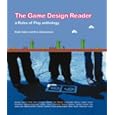
      • The Game Design Reader: A Rules of Play Anthology (2005) This companion to Rules of Play (below) includes thirty-two essays from game inventors, critics, fans and many others discussing the interaction between games and the greater culture, how inventors can create narratives for games, bringing games to market, and, at 954 pages, much, much more.
      • Rules of Play: Game Design Fundamentals (2004) In 650 pages the authors attempt nothing less than the first course book for a scientific study of game design, both the computer and tabletop varieties. This is not the usual light read, but an analytical book truly of use to the would-be game inventor, more like a text book in fact. Among the guest designers quoted are Reiner Knizia and Richard Garfield.
    • Schell, Jesse, The Art of Game Design: A Book of Lenses (2008) By a professor of game design at Carnegie Mellon University, is an in-depth discussion of the relationship between designer, player and game. A unique feature are the 100 special tips, called lenses, which are summarized on a set of cards for easy reference. Topics addessed are psychology, storytelling, engineering, business, and management. Particularly interesting essays discuss the aesthetics of the Rubik's cube and the learning curve of a jigsaw puzzle.
    • Tinsman, Brian, The Game Inventor's Guidebook (2003) (See an on-line preview here.) Contains interviews with industry luminaries such as Richard Garfield, Reiner Knizia, Alan Moon and Mike Gray (Hasbro Europe) interspersed with useful design tips for role-playing games, collectible card game, miniatures and board games. The author is head of acquisitions at Wizards of the Coast – makers of Magic: the Gathering – who has also authored The Complete Encyclopedia of Magic: The Gathering and Magic: The Gathering – Official Encyclopedia, Volume 6: The Complete Card Guide.
    • Werneck, Tom, Leitfaden für Spielerfinder One of the founding members of the famous Spiel des Jahres award has penned this Handbook for Game Inventors. Published by Ravensburger, the German edition available for 5 Euro from Adam Spielt. Apparently versions in English and Italian have been published, but are now out of print. The fifth edition (2000) had 160 pages with index. The (translated) chapter titles are as follows:
      1. How Not To Do It
      2. Give Your Idea A Chance
      3. A Few Clarifications
      4. How Do You Invent a New Game Actually
      5. What's the Chance of Success?
      6. How the Idea Becomes Real
      7. Idea Onto Paper: Game Rules
      8. Idea Into the Crucible: Game Testing
      9. Do Not Fear Idea Thieves
      10. Securing Rights
      11. Self-Publish?
      12. Off to the Post! Submission for Evaluation - to Whom and How?
      13. All Finished? Checklist for Submitters
      14. Hurrah! An Offer to Publish!
      15. What Does a Publisher Do?
      16. Game Design Conventions and Associations
      17. The Nürnberg Fair
      18. Essen and Other Events
      19. Other Countries, Other Rules
      20. A Last Word
      21. Useful Addresses
      22. Sample Texts
      23. Index
    For Collectors

    Home > Bibliography


    spotlightongames.com