See Also ...
Games about Doctors
Wine Games
|
See Also ...
|
Eight gift recommendations for 2016:
(alphabetical order)
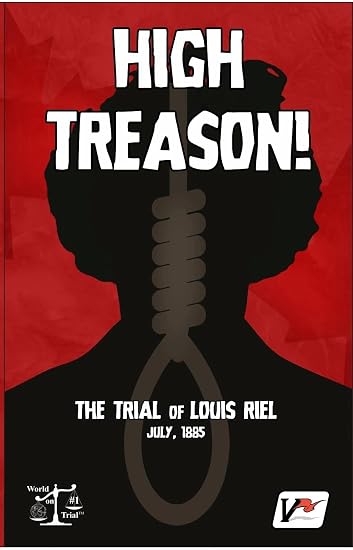
High Treason: The Trial of Louis Riel
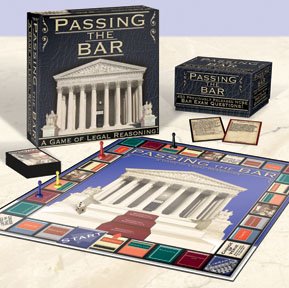
Passing the Bar
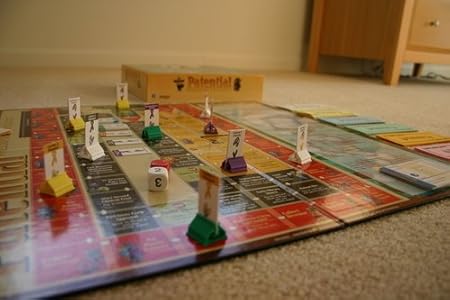
Patential: Prescription of Success
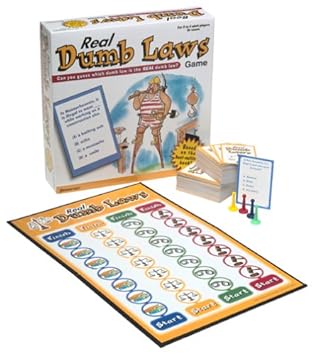
Real Dumb Laws
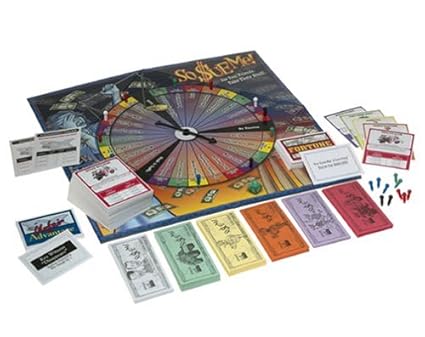
So Sue Me!
Verdict
Arrest and Trial
Burke's Law
Inventus-Patentus
Lawsuit
Trial!
Point of Law
Trial Lawyer
Capital Punishment
Attorney Power
Legal Decision
U.B. the Judge
Guilty Party
Doolittle & Waite
The People's Court
Sue For a Million
The Perry Mason Game
L.A. Law
Blind Justice
Law Courts
The Game of Law School
Tribunal Popular
The Lawyer's Game
$ue me!
Sue You!
New Games in Old Rome
Attorneys at Flaw
Squeeze the Juice
Judge 'n' Jury
In Dubio Pro Reo
Trial of the Century
Jury Trial
Judge for Yourself
Nuremberg: Trial of the Century
Divorce Court
US Patent Number 1
Witch Trial
Law & Order Game
O Jogo Legal
The Trial of Socrates
Patent Pending High Treason: The Trial of Louis Riel
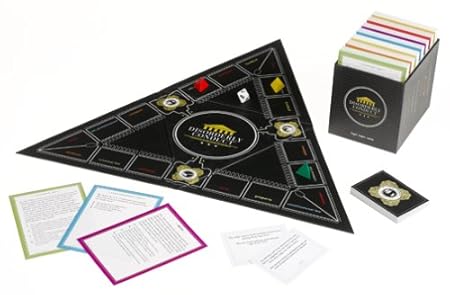
Disorderly Conduct
(uncredited); The Idea Corps-2007; 2
Roll-and-move trivia game for law students includes seven categories
questions: torts, contracts, property, criminal, evidence, constitutional and
general law. Questions are quite challenging and probably require law school
education. This may help in trying to pass the bar exam!
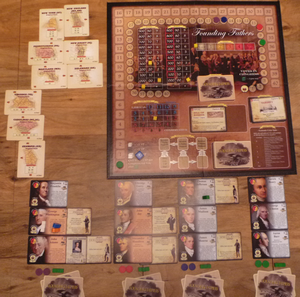
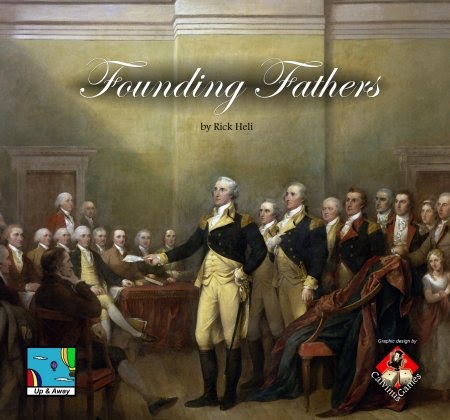
Founding Fathers
Rick Heli; The Game Crafter-2014; 2-6
In this game of the early American republic, play begins with George
Washington as president and John Adams as vice president. Together the
players try to solve the issues faced by the young republic – wars,
debt, financial panics, the growth of the Union, north-south division,
and more. Along the way they must grapple with issues of
constitutional law and the Supreme Court.
Founding Fathers
The Game Crafter
Alex Berry;
Victory Point Games-2016;
2; 45
A deduction and hand management simulation of a fascinating event in
Canadian history. In history, Riel was
hanged for treason, but now you can see whether you can change this outcome.
[Learn More]
Lawsuit!
Tina Eskreis Nelson; Professional Games-2005; 2-6; 7+
Educational game for aspiring lawyers on the law and careers in the law.
It's a roll-and-move affair of getting through law school, starting a practice,
hiring help, setting up an office, preparing a case, etc.

Caryn Pincus; P&R Educational Games-2009; 1-6
Roll-and-move trivia
games to help students learn what they need to know to pass the bar
exam.
Richard Warburg; Patential-2004; 1-4; 60
Roll-and-move game about patenting new drugs to be the first to make a
billion dollars.
(uncredited); Pressman-2003; 2-4; 60
A party game of guessing which dumb law is the real dumb law? Based on the book
101 Real Dumb Laws.
(uncredited); New York Game Factory-2004
Players acquire businesses which are at risk of being sued. Spin the
spinner, and if you land on your own business you collect money. But if
someone else lands on your business, he am likely to sue you. Five decks
of lawsuit cards give reasons to sue, and suggest different amounts for
lawsuits. The card backs, unseen by others, show
the odds of winning suits at different levels. So only you know the odds
of winning a suit. But if you have an Unfair
Advantage card you can modify the odds. Only you know what your
card says, so it may be wiser to to bluff our way to a settlement; failing
that, it's off to trial.
Other Titles
In chronological order
Charles S. Roberts, Niessen, Thiem; Avalon Hill-1959; 2
Two-player game with one prosecutor and one defender. Fifteen cases
are available. The game revolves around movement of pawns on the board.
Released in a new edition in 1961.
(uncredited); Transogram/Juegos Crone-1963; 2-6
Tie-in game for the ABC television network's Arrest and Trial
starring Chuck Connors and Ben Gazzara.
Players travel around the city collecting clues and questioning witnesses
to deduce a culprit.
Adapted from the earlier game Dragnet.
Spanish edition published as B.C.M. Brigada Criminal Movil.
(uncredited); Transogram-1963; 2-4
Tie-in game for the ABC television network's program of the same name
starring Gene Barry. Players gather evidence from a country and a city house
in the form of cards, trying to match one of the houses and thus "prove"
the murderer and murder weapon.
(uncredited); Patented Products Industries-1965; 2-4; 8+
Roll-and-move game akin to
Monopoly
with the addition of a trivia element; landing on an unowned space
grants ownership if the player successfully answers a question about
the inventor of a historical item.
L.J. Gendron; self-1967
Play cards to increase the value of your lawsuit or lower
that of the other side. First to $100,000 wins.
(Sounds like a
(uncredited); Creative Communications & Research-1971
Role-playing party game with a voted result.
Michel Lipman; 3M/Avalon Hill-1972
The information on this Bookshelf Game reads
"POINT OF LAW is an exciting game of involvement for all players. You are
the judge and jury! You decide which argument is most convincing. Many
an interesting discussion – and an occasional laugh or two – takes
place as players use logic and intuition in reaching their decisions."
James N. Vail; self-published-1977
Roll and move trying to win over enough jurors to be declared not guilty.
(uncredited); Hammerhead Enterprises-1981
Win by manoeuvring all four "criminals" in such a way that they are all
in Life Imprisonment, Death Row or the Electric Chair. Or the player may
use his two "liberals" to spring the opposing players' criminals from the
"Path of Justice" back to the Street often enough to turn all fifteen of
each opponent's Innocent Citizens into Victims of violent crimes. Victims
go to Heaven. Employs the roll-and-move mechanism.
(uncredited); publisher-1982
Roll and move trying to be the first to fill your law office with clients.
James N. Vail; Professional Games-1985
It seems that James N. Vail decided to take a second try...
Roll, move and learn about the law and legal system.
(uncredited); Edu-Game Enterprises-1985
Roll, move and learn about California law.
(uncredited); Don Scott Associates-1986
Role-playing party game in which players are presented
various bits of evidence and then vote on the verdict.
(uncredited); Inward Games-1986
Negotiate your way through a pre-trial settlement.
(uncredited); Hoyle Products-1986
Roll and move tie-in to the American television program.
Gary Sherbell; Gary Sherbell-1986
Players move around the board; who can sue whom, and for how much money,
depends on where the players land. Players sue in one of four torts:
assault, fraud, libel and negligence. Players are dealt a hand of evidence
and other cards, which are used to determine a trial winner, if a trial
is necessary. The winner is the player who has the most money when the
game ends.
(uncredited);
TSR-1987
Roll and move with logical deduction tie-in to the
American television program.
(uncredited); Galoob-1988
Two players argue one of the included cases while the rest vote a verdict,
and then the real-life verdict is revealed.
Dyer & Katz; Avalon Hill/Klee-1989
Sub-titled "The Game of Lawsuits", it uses 168 condensed versions
of actual claims for damages in the US courts, as players represent
the plaintiffs and defendants. As they win or lose cases, by skill or
chance, players rise through the court system and win by getting lots
of money. Published by Avalon Hill, with a German edition by Klee.
May be limited in its replay value as cards are single use.
(uncredited); Oliron Games Limited-1991
Roll and move game of deciding which cases to prosecute.
Based on British legal system.
(uncredited); Charles Games Concepts-1991; 2-4; 90
Trivia game that includes dice rolling and movement to determine the question
type, one of constitutional, tort, judicial, criminal, business or property law.
unknown; unknown-1991; 3-6; 15
There are five different types of cases: murder, rape, divorce, drunk
driving and fraud. Players move about the board via dice, answering
legal questions, until 2-3 of these are resolved.
(uncredited); Pastime Games-1992
"Each player must take a case to explain away the known facts on their
Crime Card in under two minutes, suffer the cross examination of their
fellow players and succeed in predicting the jury's verdict following
your stirring defense. Any actual knowledge of the law may be a handicap,
so top lawyers will probably do well."
(uncredited); Litke Brothers-1993; 60
Subtitled "The Classic Game of Lawsuits".
Simulates and parodies the craftiness employed by attorneys.
Choose to counsel the plaintiff or the defendant, but
prepare for some surprising facts, unlikely witnesses, and
outrageous characters.
(uncredited); (uncredited)-1994
Become the wealthiest player by successfully suing other players. The
game ends when one of the players runs out of money. (Another form
of Monopoly?)
Reiner Knizia; Piatnik-1994
Reiner Knizia's game pack includes "Tribunal", a negotiation game of
trying to save one's defendants in the notorious courts of Ancient Rome.
(uncredited); Windbreaker Entertainment-1995
A whole raft of new games on the topic suddenly appeared in 1995...
Roll, move and sue trying to be the first to earn a million.
(uncredited); SCNA Corp.-1995
The event this game is based on is no doubt the reason ...
Monopoly variant based on O.J. Simpson's defense team in which
players try to gain as much of his defense money as possible.
(uncredited); Winning Moves USA-1995
Trivia game of guessing the verdicts for various cases
presented on audio tape.
Valentin Herman; Fanfor-Verlag-1995
German card game of guilt or innocence.
(uncredited); Companion Games-1996
The trend continued on into 1996 ...
Roll and move trying to prove O.J. Simpson guilty or innocent.
Edward Longan. Home Rock Entertainment-1996; 2-4; 8+
Each plays the role of an attorney, representing the same defendant.
The one delivering a Not Guilty verdict, and earning the most money,
wins this game of roll-and-move with some negotiation.
(uncredited); Pressman-1998
Trivia game of guessing the verdicts for various cases.
Gary Graber; Minden Games-1999
This one seems too serious a topic for a board game ...
Roll and move trying to gain as many convictions as
possible while avoiding the appearance of a "show trial".
(uncredited); Hubline-2000; 2-9
Roll-and-move game of court appearances and collecting money.
James Ernest; Cheapass Games-2001; 3-6; 60
Game about a competition to be the first to patent a time machine
with wonderful Victorian-era-inspired time machine
and gadget artwork.
Review
James Ernest; Cheapass Games-2001
Negotiate your way through a series of trials in the days
of old Salem.
Review
(uncredited); Cardinal-2004; 2-4; 30
Tie-in to the NBC television network program.
Players travel around the city collecting clues and questioning witnesses
to deduce a culprit.
Maciel Rocha, Gustavo Eugenio;
Estude & Brinque-2004
Brazilian game that simulates the legal profession, not just lawyers, but
also judge, prosecutor, commission agent, notary, solicitor, appeals court
judge ...
Steve Finn; Dr. Finn's Card Company-2009; 2; 20
Antagonists in this
card game use simultaneous choices and majority control to determine
the outcome of this famous trial.
Nicholas Witchey; self-2012; 3-5; 45
Card game about securing patents. The current player attempts to get a
patent card approved while the rest play cards that represent prior art
or change the game play. If the patent survives these attacks, credit is
awarded to the current player.
Alex Berry;
Victory Point Games-2016;
2; 45
A deduction and hand management simulation of a fascinating event in
Canadian history. Louis Riel was a figure who in the 1800s led a
rebellion in Manitoba's Red River valley, forcing the government into a
compromise. Later he participated in the North West Resistance, but
the goverment quashed it in 1885 and put Riel on trial for treason.
Players take opposite sides in the five day trial. In history, Riel was
hanged, but now you can see whether you can change this outcome.
The game is also available in a print-and-plan version.
|
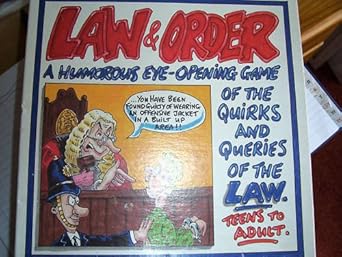
Law & Order
(uncredited); BV Leisure-(year unknown); 2-6; 120
British law is the subject of this trivia game, including matrimonial,
employment, criminal, police, family and consumer law. Players roll to move
with the landing space determining the question type. Includes 168 question
cards.
Voir Dire: The Game of Lawyers, Jurors and Justice
Benjamin D. & Tim Stanley; (unknown)-(unknown year); 2; 10
As every attorney knows, the title is the term for jury selection.
In this short game the players attempt to influence a jury trial
in their favor by means of bluffing, planning and jury manipulation.
Spotlight on Games
>
Ludographies
Created November 29, 2014
If you are interested in learning about the law, these games may help you
learn about the
different types of lawyers
and the law they practice. The cases that a family lawyer or contract
lawyer handles are quite different from the cases a
criminal lawyer Dayton Ohio
would handle.